

← Course HubCarbohydrates Exam Questions →
Windsor Olympus Academy

GCSE Food Preparation & Nutrition

Carbohydrates · Learn & Revise

YOUR REVISION GUIDE

Learn the knowledge. Apply it to exam questions.

Explore carbohydrate nutrition, grains and cereals, food science and the skills used to prepare carbohydrate-rich foods. Open the explanations, practise a quick knowledge check, then choose Practise exam questions to test your understanding. You can return to these notes whenever you need them.

0 of 8 sections revised

The main types of carbohydrate

Carbohydrates include sugars, starch and dietary fibre. Their chemical structures help explain how they behave in foods.
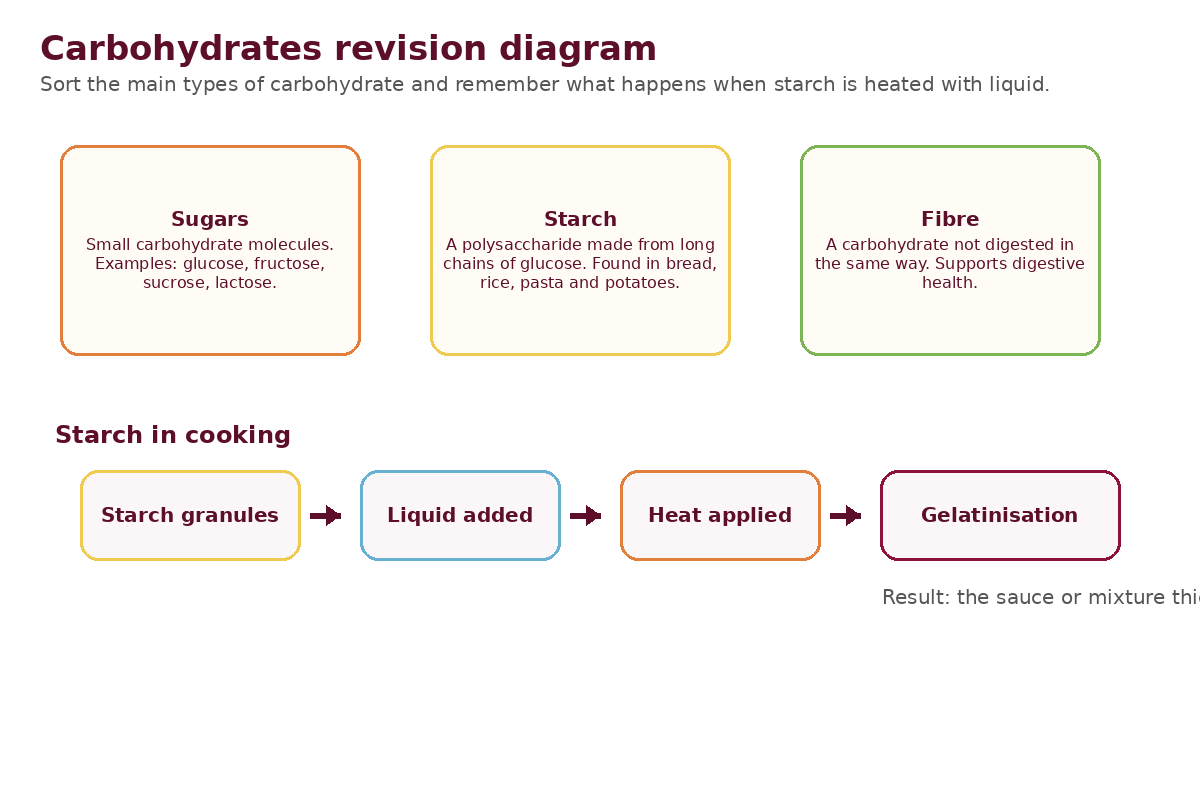
Types of carbohydrate and a simple gelatinisation sequence.
SugarsMonosaccharides and disaccharides are smaller carbohydrate molecules.
StarchA polysaccharide found in foods such as bread, rice, pasta and potatoes.
FibreA carbohydrate that supports digestive health and is not digested like starch.
Food scienceStarch plus liquid and heat leads to gelatinisation and thickening.
Sugars and starch
Sugars include glucose, fructose, sucrose, lactose and maltose. Starch is a polysaccharide: long chains of glucose molecules. Starchy foods include rice, potatoes, bread and pasta.
Monosaccharides and disaccharides
Monosaccharides contain one sugar unit, for example glucose or fructose. Disaccharides contain two joined sugar units: sucrose is glucose plus fructose; lactose is glucose plus galactose; maltose contains two glucose units.
What is dietary fibre?
Dietary fibre (also called non-starch polysaccharides or NSP in many GCSE materials) is not digested by human digestive enzymes in the small intestine. It supports normal bowel function. Wholegrains, fruit, vegetables and pulses are useful sources.
Carbohydrate energy
Digestible carbohydrate supplies approximately 4 kcal (17 kJ) per gram. It is an important source of energy for ordinary activity, growth and body functions. A balanced eating pattern includes varied carbohydrate-rich foods.
Quick knowledge checkThink first, then reveal

Which sugar is naturally present in milk?

Reveal explanation
Lactose is the disaccharide found in milk; it is made of glucose and galactose.
Practise exam questions →

Carbohydrates in the diet

Understand energy provision and the role of fibre, alongside the advantages of choosing a variety of foods.

Digestion of starch
Digestion breaks starch down into smaller sugars and ultimately glucose that can be absorbed. Glucose circulates in the blood and can be used by cells to release energy.
Starchy food choices
Bread, cereals, rice, pasta and potatoes provide carbohydrate, and many also supply some protein, vitamins and minerals. Wholegrain choices often supply more fibre than refined alternatives.
Fibre and health
Fibre supports bowel regularity and is associated with wider digestive and cardiovascular health benefits. Include a variety of sources such as oats, beans, wholegrain bread, fruit and vegetables.
Added and free sugars
Free sugars include sugars added to foods and drinks, plus those naturally present in honey, syrups and fruit juices. They differ from sugars within the cellular structure of whole fruits. Consider the total diet and dental health.
Quick knowledge checkThink first, then reveal

Why does wholemeal bread often contain more fibre than white bread?

Reveal explanation
Wholemeal flour retains more of the bran and germ from the grain, particularly the fibre-rich outer layers.
Practise exam questions →

Cereals, flour and grains

Recognise cereal commodities and how processing affects their food value and functional properties.

Cereals and examples
Cereals are cultivated grasses grown for their edible grains. Examples include wheat, oats, barley, rice, rye and maize. Grains can be eaten whole or processed into flour, breakfast cereals and other products.
Parts of a grain
The bran is the fibre-rich outer layer; the germ contains fats and various vitamins; the endosperm is mainly starch with some protein. Milling separates these components to produce different flours.
White versus wholemeal flour
White flour contains mostly endosperm. Wholemeal flour includes the bran, germ and endosperm; it is often higher in fibre. Different flours can affect dough structure, flavour, texture and colour.
Flour strength
Strong bread flour generally has more of the proteins that form gluten when hydrated and worked, helping a bread dough stretch and trap gases. Low-protein flours are useful for some cakes and pastries where a tender texture is preferred.
Quick knowledge checkThink first, then reveal

Which part of a wheat grain is especially rich in fibre?

Reveal explanation
The bran, the grain’s outer layer.
Practise exam questions →

Breadmaking and yeast fermentation

Link the ingredients and breadmaking process to the structure and texture of the finished loaf.

Functions of bread ingredients
Flour supplies starch and gluten-forming proteins; water hydrates the flour; yeast generates carbon dioxide; salt adds flavour and helps regulate fermentation. Small quantities of fat or sugar may alter crust and crumb.
Kneading and gluten
When wheat flour is hydrated and worked, glutenin and gliadin form a network of gluten. Kneading develops this elastic network, which helps trap gas bubbles during proving and baking.
Yeast and proving
Yeast ferments available sugars and produces carbon dioxide and ethanol. Gas expands pockets in the dough. Proving allows the dough to rise; under- or over-proving can affect volume and crumb.
Changes in the oven
Early heat can produce oven spring. Yeast becomes inactive at high temperature, proteins set and starch gelatinises. Surface browning develops colour and flavour, including through Maillard reactions.
Quick knowledge checkThink first, then reveal

Why is bread dough kneaded?

Reveal explanation
To develop an elastic gluten network that traps carbon dioxide and supports a light bread structure.
Practise exam questions →

Starch in cooking

Starch can thicken sauces, set mixtures and change texture when exposed to water and heat.

Gelatinisation
When starch is heated in sufficient water, the starch granules swell and absorb liquid; some components move out into the mixture. The result is thickening, as seen in a white sauce or custard thickened with cornflour.
Dextrinisation
Dry heat can break starch down into shorter chains called dextrins. Toasting bread is one food example; colour and flavour also change through other browning reactions.
Retrogradation and staling
As a cooked starch product cools, starch molecules can reassociate. This contributes to firming and staling in bread and other foods. Freezing bread soon after purchase can slow quality loss during storage.
Preventing lumps in sauces
Mix starch with a cold liquid first or carefully disperse it before heating. Stir and heat until the mixture thickens. Adding dry starch directly to hot liquid can cause an uneven, lumpy result.
Quick knowledge checkThink first, then reveal

Why does a cornflour sauce thicken when heated?

Reveal explanation
Starch granules absorb liquid and gelatinise, making the mixture thicker.
Practise exam questions →

Pasta, rice and potatoes

Explain the preparation, cooking and quality checks for important starchy commodities.

Pasta types and ingredients
Traditional pasta is usually made from durum wheat semolina and water; some varieties use eggs. Pasta shapes vary in thickness and surface area, affecting cooking time and how they hold sauces.
Cooking pasta and rice
The starch absorbs water and gelatinises as it heats. Follow appropriate cooking guidance and check texture. Rice requires careful storage after cooking, since Bacillus cereus spores can survive cooking and bacteria can grow if rice is left warm.
Potato varieties and uses
Waxy potatoes tend to hold their shape after boiling and suit salads; floury varieties tend to break down more easily and suit fluffy mash or roast potatoes. Variety and treatment affect results.
Comparing cooking methods
Boiling, steaming, baking and roasting can create different textures and flavours. A cooking method affects time, fuel use, moisture retention and sometimes the amount of added fat.
Quick knowledge checkThink first, then reveal

What happens to starch in potatoes when they are cooked in water?

Reveal explanation
The starch absorbs water and gelatinises, helping the potato soften.
Practise exam questions →

Sugars in food preparation

Sugars influence sweetness, preservation, colour, texture and the outcome of baked products.

Functions of sugar
Sugar provides sweetness and can help tenderise cakes, aid aeration in the creaming method, contribute to browning and support preservation in sufficiently concentrated products such as jam.
Caramelisation
On heating, sugar breaks down and develops characteristic brown colour and caramel flavour. Caramelisation is different from the Maillard reaction, which involves amino groups and reducing sugars.
Sugar in bread and cakes
In dough, yeast can use available sugars during fermentation. In creamed cakes, sugar crystals help create air pockets in fat; trapped air expands as the cake heats.
Lactose
Lactose is the sugar in milk. Lactase is the enzyme that digests it. Lactose intolerance results when the body does not produce enough lactase to digest lactose comfortably; it differs from an allergy to milk proteins.
Quick knowledge checkThink first, then reveal

What is the name of the browning process when sugar alone is heated?

Reveal explanation
Caramelisation.
Practise exam questions →

Carbohydrates, food choice and provenance

Connect how carbohydrate foods are produced and selected to nutrition, resources and food waste.

Primary and secondary processing
Primary processing might include cleaning, drying and milling grain. Secondary processing makes products such as pasta, bread, breakfast cereal or biscuits from processed ingredients.
Fortification and enrichment
Some processed cereal products have vitamins or minerals added. Fortification increases nutrient content; enrichment may replace nutrients lost during processing. Check the actual product label and relevant legislation.
Labelling and allergies
Products containing wheat, rye or barley may contain gluten, which people with coeliac disease must avoid. Labels are essential because gluten can also occur in sauces, coatings and composite foods.
Sustainability and reducing waste
Consider crop inputs, transport, packaging, storage and appropriate portion planning. Bread leftovers can be transformed safely into breadcrumbs; careful storage helps reduce spoilage and waste.
Quick knowledge checkThink first, then reveal

What does secondary food processing mean?

Reveal explanation
Making a new food product from ingredients that have already undergone primary processing, such as producing bread from milled flour.
Practise exam questions →