Explore the nine sections below. Open each explanation to revise key knowledge, note the exam tips, then select Practise exam questions to visit your existing interactive Protein question page. Work at your own pace.
Protein is a macronutrient made from chains of amino acids. The body needs protein for growth, repair and maintenance of body tissues. Protein can also provide energy, but this is not its main role.
HBV and LBV proteins, complementation and food-science changes in protein foods.
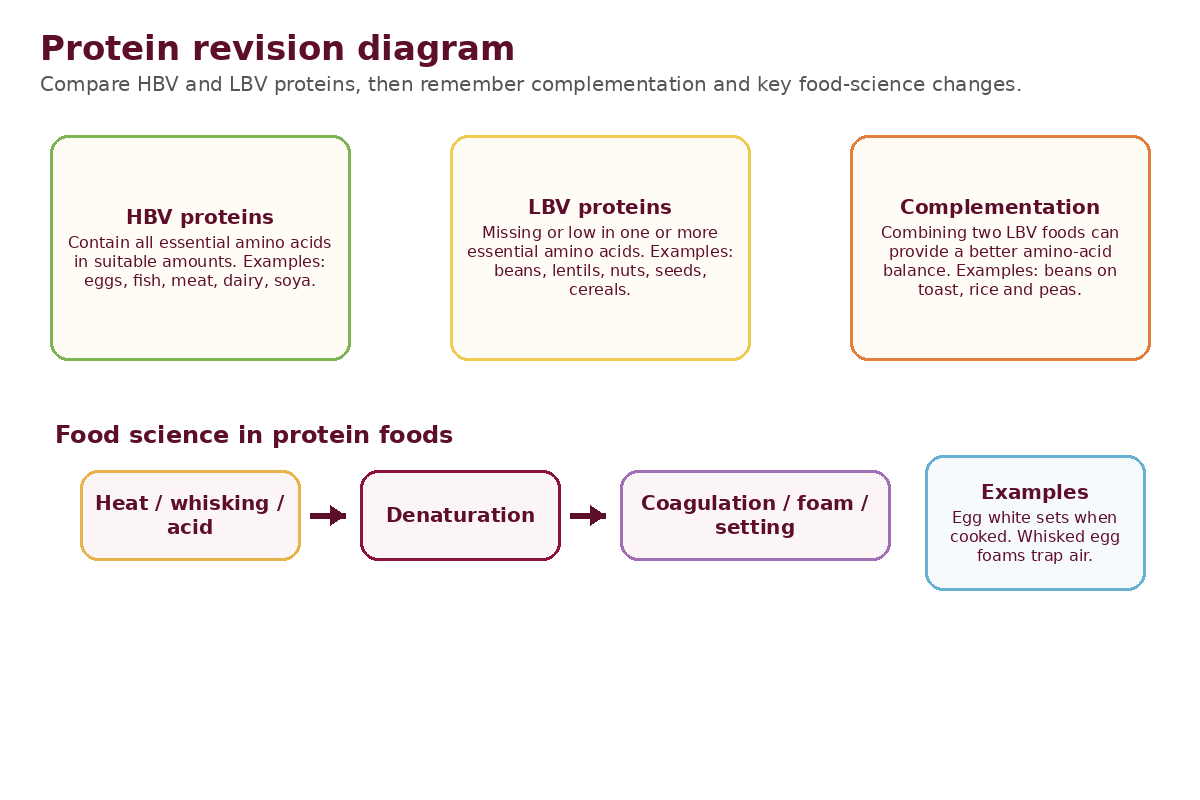
RememberHBV proteins contain all essential amino acids in suitable amounts.
Use in answersName an example and explain why a food or combination is nutritionally useful.
Food scienceHeat can denature protein and lead to coagulation or setting.
ExamplesEggs, fish, dairy, pulses, cereals and combined plant proteins all matter.
Why do we need protein?+
Growth of body tissues; repair after damage; maintenance of muscles, skin and organs; production of enzymes, some hormones and antibodies. Protein supplies about 4 kcal (17 kJ) per gram.
Amino acids+
Proteins are broken down during digestion into amino acids and absorbed into the body. Essential amino acids cannot be made in sufficient amounts by the body and must be obtained from food.
Requirements+
Protein needs vary with age and circumstances. Children and teenagers need protein to support growth; people recovering from illness or injury may need careful nutritional support.
Protein quality depends partly on its essential amino acid content. You should be able to define high and low biological value and give accurate examples.
High biological value (HBV)+
HBV proteins provide all nine essential amino acids in adequate amounts. Examples generally include meat, fish, eggs, milk, cheese, yoghurt and soya.
Low biological value (LBV)+
LBV proteins are limited in one or more essential amino acids. Many individual plant protein sources are LBV, such as some cereals, beans, nuts and seeds.
Protein complementation+
Combining different plant protein sources can provide a more balanced essential amino acid profile. Examples: beans on wholemeal toast, lentils with rice, or hummus with wholemeal pitta.
These protein-rich foods vary in nutritional composition, storage requirements and cooking characteristics.
Meat and poultry+
Red meat can provide haem iron and vitamin B12. Chicken is a useful source of HBV protein. Fat content varies by cut and preparation method; remove visible fat or skin if adapting a dish.
Fish+
Fish supplies HBV protein. Oily fish such as salmon, sardines and mackerel also supplies omega-3 fats. White fish such as cod is usually leaner. Fish muscle has shorter fibres and relatively little connective tissue, so it often cooks quickly.
Choosing methods+
Baking, grilling, steaming and poaching can minimise the need for added fat. A food-safe thermometer and current safety guidance help ensure poultry is thoroughly cooked.
Egg proteins change when heated or mechanically worked. Learn both the scientific terms and their effects in practical dishes.
Denaturation+
Heat or whisking changes the shape of protein molecules. In egg white, the proteins unfold before forming new bonds.
Coagulation+
As heat continues, unfolded proteins bond to form a more solid network. This causes scrambled or poached eggs to set. Excessive heating may make the result rubbery or watery.
Aeration and foam+
Whisking egg whites traps air in a protein foam. During baking, air expands and egg proteins set to help create structure, such as in meringues or sponge products.
Emulsification and binding+
Egg yolk contains lecithin, an emulsifier useful in mayonnaise. Eggs can also bind mixtures, glaze baked products and thicken custards.
Many suitable alternatives to meat provide protein. Be able to identify products, explain their characteristics and suggest suitable recipe substitutions.
Pulses and legumes+
Beans, chickpeas and lentils can be used in chilli, soups, curries and burgers. They provide protein and fibre and are often inexpensive.
Soya and tofu+
Soya supplies HBV protein. Tofu is made by coagulating soya milk and can absorb flavour from marinades and sauces.
Mycoprotein+
Mycoprotein is produced by fermenting a fungus, then processing it into products. Check ingredients: some products contain egg and may not be suitable for vegans.
Nuts and seeds+
Examples include peanuts, almonds, sunflower and pumpkin seeds. These supply protein but may also contain significant amounts of fat; nuts and peanuts are important allergens.
Many foods rich in protein and moisture can support harmful microbial growth. Correct preparation and storage prevent foodborne illness.
Prevent cross-contamination+
Keep raw meat and poultry separate from ready-to-eat foods. Wash hands after handling raw foods and clean and sanitise equipment and work surfaces. Never wash raw chicken, as splashes can spread bacteria.
Storage and temperature+
Follow the packaging instructions and school food safety procedures. Keep chilled foods refrigerated; avoid leaving perishable foods at room temperature; defrost safely and cook foods thoroughly.
Key hazards+
Raw poultry can carry Campylobacter or Salmonella; eggs and other foods can also pose risks if mishandled. Use separate preparation areas and appropriate utensils.
Practical application+
When preparing a chicken dish, identify the hazard, the control measure and why it matters; for example, separate boards prevent bacteria passing to salad ingredients.
A balanced diet provides sufficient protein without relying on one food source. Consider the broader nutrient profile and dietary requirements.
Too little protein+
An inadequate protein intake can impair normal growth, tissue repair and maintenance. Severe deficiency can contribute to protein-energy malnutrition.
Reducing meat intake+
A varied diet can use pulses, soya, nuts, seeds and other protein sources; people reducing animal foods should also consider sources of iron and vitamin B12.
Allergies and restrictions+
Milk, egg, fish, soya and certain nuts are regulated allergens. Check product labels and prevent cross-contact; lactose intolerance concerns a milk sugar and is not the same as milk-protein allergy.
Planning balanced meals+
Combine protein foods with starchy carbohydrates, vegetables or fruit, and appropriate fats. Choose the source and cooking method to suit the consumer.
Be able to discuss animal and plant production, sustainability and the factors affecting consumer choices.
Animal production+
Meat, poultry, fish, eggs and dairy come from farms or fisheries. Production methods, welfare and environmental impact can vary.
Plant production+
Pulses, soya, nuts and seeds are grown as crops; processing can turn them into tofu, textured vegetable protein and other alternatives.
Sustainability decisions+
Consider emissions, land and water use, fishing practices, transport, packaging, seasonality and food waste rather than relying on a single label such as “local”.
Provenance and labels+
Traceability, origin, farming method and certification may influence consumer choices. Claims need evidence and context.